Market · The money behind it
Big Tech bets $735 billion on AI. Most companies haven’t plugged in.
Three of the four giants now spend more than their business brings in, on a technology most companies still don’t use. Why they do it anyway, and the three things that have to happen for it to pay off.
 Upstairs
Data as of October 26, 2026
13 min read
30 sources · 5 charts
$735bn
Big Tech’s AI bill for 2026
- FloorG · Market
- Letter13 min · 30 sources
In this articleWhat you’ve heard
That’s what Amazon, Alphabet, Microsoft and Meta plan to spend this year on data centers and the chips inside them, mostly for AI. About 80% more than in 2025.
Meanwhile, only about one American business in four used AI in the past two weeks, according to the Census Bureau. In Europe, one in five uses it at all.
And across all American workers, AI saves about that much time a week. The figure you’ve probably read is 11 hours.
So why would the most profitable companies in the world spend more than their operations bring in on something most businesses don’t use? You’ll hear two answers: it’s a bubble, or it’s a revolution. Both skip the question that decides who’s right. What has to happen for this money to come back?
We count three conditions. Here’s where each one stands today, and five numbers you can check every quarter to judge for yourself.
What has to be true for the bet to pay
Three conditions. Each one gets its own part below.
- CONDITION 1Someone has to payCompanies paying from their own budgets, beyond the AI labs the giants fund.
- CONDITION 2The gains have to show upIn company accounts and in the economy, beyond what people say in surveys.
- CONDITION 3Before the chips wear outThe equipment is written off in five to six years. That’s the clock.
What you’ve heard
Do 95% of companies’ AI pilots fail?
MIT report: 95% of generative AI pilots at companies are failing
Fortune headline, August 2025
MisleadingThe MIT report behind it says 95% of organizations got “zero return,” measured in profit six months after a pilot. It rests on 52 interviews and 153 executives surveyed at industry conferences, and its authors call their own figures “directionally accurate.” See the facts
Does AI save workers 11 hours a week?
Workers say AI automation saves them roughly 11 hours a week
Glean, Work AI Index, June 2026
MisleadingIt’s what 6,000 full-time digital workers told a company that sells AI software. In a representative survey, AI users report closer to two hours, and across all workers it’s about 50 minutes. See the facts
Will AI wipe out half of entry-level office jobs?
AI could wipe out half of all entry-level white-collar jobs
Axios, May 2025, on Anthropic’s chief executive Dario Amodei
Too earlyThese are Axios’s words: Amodei wasn’t quoted directly, and the forecast says “could,” within one to five years. So far, young workers in exposed jobs are falling behind, without widespread job losses. See the facts
Three questions to ask any AI number
- Who paid for it?A survey by a company that sells AI is a sales pitch until someone independent finds the same thing.
- Who was asked?Early adopters at a tech conference don’t speak for the economy.
- Measured, or felt?People are bad at timing themselves. You’ll see by how much.
Downstairs, the noise.
Upstairs, the facts.
That’s the Upstairs rule: a claim stays downstairs until a filing or a second source backs it up. From here on, everything does.Why they bet anyway
Start with the people signing the checks. In July 2024, Alphabet’s chief executive Sundar Pichai explained the logic on an earnings call.
The risk of under-investing is dramatically greater than the risk of over-investing for us here.
Mark Zuckerberg said the same in September 2025. Misspending “a couple of hundred billion dollars” would be “very unfortunate,” he told the Access podcast, “but what I’d say is I actually think the risk is higher on the other side.”
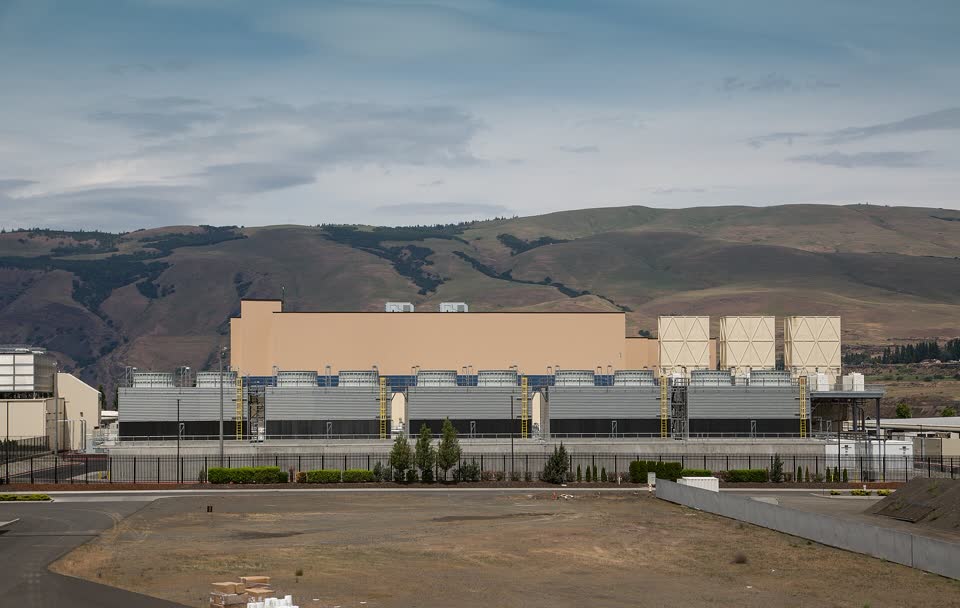

Company by company, the reasoning holds. If AI becomes the next computing platform and you didn’t build, a rival takes your cloud customers or your advertisers. If it doesn’t, you’ve wasted money you can afford to waste. So nobody stops first. The trouble is that all four are building for the same customers at the same time. Each bet makes sense on its own. Added together, they can produce far more capacity than anyone will pay for.
It has happened before. Between 1997 and 2001, telecom companies laid $90 billion of fiber-optic cable, sure that internet traffic would explode. It did, eventually. But in April 2001 the long-distance backbone was running below 3% of its capacity, according to the Dallas Fed, and telecom stocks lost about $700 billion of market value between 2000 and 2002. The internet was real. The timing was wrong.
What changed this year. Until recently, the giants paid for the build-out with spare cash. In their latest results, three of the four spent more on infrastructure than their businesses brought in.
Three of the four now spend more than they bring in
Capital spending as a share of cash from operations, latest reported period
100% = every dollar the business brings in
See the data
| Company | Capex | Cash from operations | Ratio |
|---|---|---|---|
| Alphabet, Q2 2026 | $44.9bn | $39.1bn | 115% |
| Amazon, 12 months to June 2026 | $173.0bn | $161.4bn | 107% |
| Meta, Q3 2026 | $34.9bn | $32.8bn | 106% |
| Microsoft, Apr–Jun 2026 | $35.8bn | $55.4bn | 65% |
Source: company results (Alphabet, Amazon and Microsoft for the quarter to June 2026, Meta for the quarter to September 2026). Upstairs calculation: capital expenditures divided by cash from operations. Periods differ: one quarter, or twelve months for Amazon. Meta’s figure includes finance lease payments, as Meta reports it; Microsoft’s counts cash purchases of equipment only, without finance leases, so its ratio is understated.
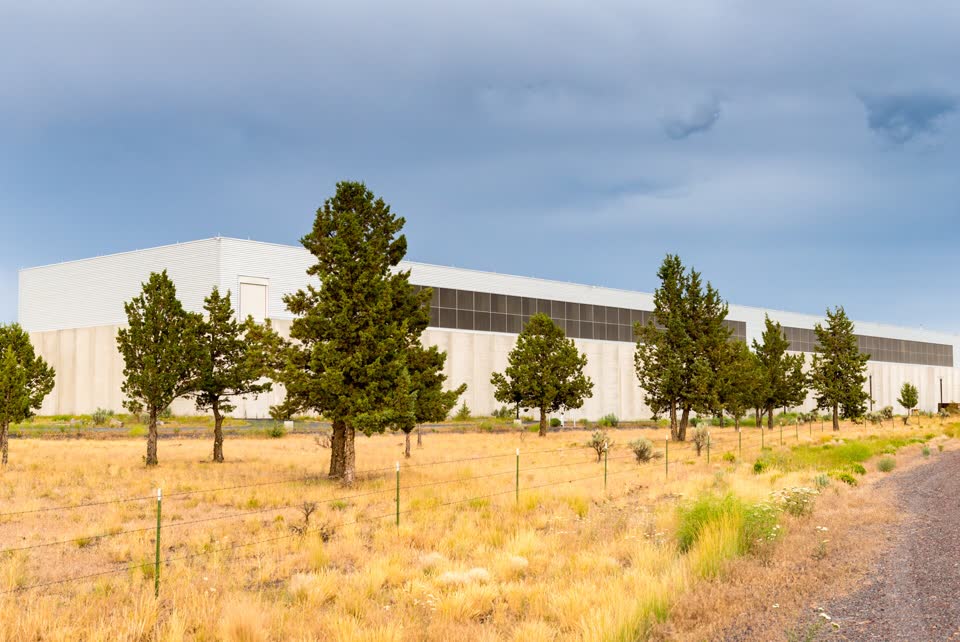

To cover the gap, they borrow. According to their own balance sheets, Alphabet’s long-term debt doubled in six months, to $98.2 billion, and Amazon’s went from $65.6 billion to $128.9 billion. Meta, Alphabet and Oracle have each sold $25 billion of bonds in a single deal this year. Microsoft is the exception: its spending still uses about two thirds of the cash its operations bring in.
Our read. The giants are betting on position more than on payback: for them, being late would cost more than being wrong. That logic is sound for each company, and it’s how whole industries overbuild. Debt adds one thing. If the bet disappoints, lenders now share the loss.
CONDITION 1Someone has to pay
So who buys all this computing power? Today, the biggest buyers are the AI labs, OpenAI and Anthropic first. And a large part of the labs’ money comes from the giants themselves.
The money goes around
What the giants put into the AI labs, and what the labs have committed to spend with them in return
Invested in the labCommitted back to the giant
Sources: Microsoft and OpenAI, October 28, 2025; Anthropic, April 20, 2026; Bloomberg, April 24, 2026. Commitments are contracts spread over several years.
The loop shows up in their accounts. In January, Microsoft said about 45% of the $625 billion of future revenue it had under contract at the end of 2025 was from OpenAI, a company it partly owns. By June, that backlog had grown 84% in a year, and 25% without OpenAI. In the second quarter, Amazon booked $53.4 billion of pre-tax, non-operating income “primarily from our investments in Anthropic,” a company that has promised to spend more than $100 billion with it. This spring, Nvidia took a $30 billion stake in OpenAI, and Amazon committed up to $50 billion more.
None of this makes the demand fake. Millions of people use ChatGPT and Claude, and the labs’ revenue is growing fast: OpenAI was bringing in about $50 billion a year at its September pace, and Anthropic’s annualized pace passed $47 billion in May, by its own count. But next to what’s being built, it’s small.
Big Tech will spend more than seven times as much on infrastructure this year as OpenAI and Anthropic together bring in at their current pace.
So the customer that eventually has to show up is everyone else: companies, paying from their own budgets.
People got there before their companies
Out of 100, United States, latest survey for each
52in 100
American workers have used AI at work
Gallup, May 2026, at least a few times a year.
24in 100
American businesses used AI in the past two weeks
Census Bureau, in any business function, late September to early October 2026.
Sources: Gallup, May 2026; US Census Bureau, Business Trends and Outlook Survey, published October 22, 2026 (24.6%). Two different surveys: one asks people, the other asks companies.
Use is spreading from the bottom up. Workers try tools on their own, often free ones: in a BCG survey of 10,600 workers in 11 countries, 54% said they would use AI tools even without authorization. In 2025, only 22% of American employees said their organization had a clear AI plan, Gallup found.
When companies do pay, they pay little. Ramp, a corporate card company, sees 56% of the businesses it serves paying for AI tools. The median one spends $15.70 per employee per month, the price of a software subscription, and the share of paying customers has grown more slowly since May. Filling $735 billion of data centers takes much bigger checks.
Even the official count depends on the wording. When the Census Bureau changed its question in late 2025, from using AI “in producing goods or services” to using it “in any of its business functions,” the share of businesses jumped from about 10% to 17%, the St. Louis Fed noted. Same companies, different question.
Our read. The demand is real, and a visible part of it is the giants’ own money going around: they fund the labs, the labs rent their data centers, and their backlogs and profits swell. Condition 1 is met when ordinary companies start paying. So far, most of them are watching their employees experiment.
CONDITION 2The gains have to show up
Companies will keep paying only if AI makes them more productive. Start with time. The figure you’ve probably seen is 11 hours a week. Run it through our three questions. Who paid for it: Glean, a company that sells AI assistants. Who was asked: 6,000 digital workers, 87% of them already using AI. Measured, or felt: felt.
The St. Louis Fed asks a representative sample of all American workers. In the third quarter of 2026, they reported that AI saved them 2.1% of their working hours: about 50 minutes in a 40-hour week, or roughly two hours for those who use it.
Where the minutes go. Economists Anders Humlum and Emilie Vestergaard followed 25,000 Danish workers in 11 occupations exposed to chatbots. Users saved about 3% of their working hours, and 80% of them put that time into other tasks, while fewer than 10% took it as breaks. Chatbots even created new tasks for 8.4% of workers. Two years after ChatGPT’s launch, the 2026 update of their study finds no effect on earnings or hours worked. “Technological change reshapes work well before it surfaces in earnings or hours,” they write.
Part of the time goes into supervising the machine: Glean’s own survey counts 6.4 hours a week of “botsitting,” feeding AI context and fixing its mistakes. And our sense of speed misleads us. In a 2025 trial by METR, 16 experienced developers were 19% slower with AI tools, while believing they had been 20% faster.
Felt, then measured. Companies feel the gains more than they can show them. In a survey of finance chiefs, firms said AI raised output per worker by 1.8% in 2025, but the gains implied by their own revenue and staffing figures were “much smaller,” the Atlanta Fed found. Across the economy, US productivity rose 2.2% over the year to mid-2026, and the St. Louis Fed says AI has “not yet produced a measurable bump.”
The layoff test. If AI were already saving companies a lot of money, payrolls would show it. US employers did cite AI for 120,136 announced job cuts through September, the leading reason this year, according to Challenger, Gray & Christmas. Look closer. These are announcements, with the reason the employer chose to give, and AI is an easy reason to give. Two days after a memo announcing 14,000 job cuts that talked about AI, Amazon’s Andy Jassy said the cuts were “not even really AI-driven.” And the monthly count peaked in May.
AI-blamed job cuts peaked in May
US job cuts announced with artificial intelligence given as the reason, by month, 2026
See the data
| Month | Job cuts citing AI |
|---|---|
| Jan 2026 | 7,624 |
| Feb 2026 | 4,680 |
| Mar 2026 | 15,341 |
| Apr 2026 | 21,490 |
| May 2026 | 38,579 |
| Jun 2026 | 14,029 |
| Jul 2026 | 10,970 |
| Aug 2026 | 3,462 |
| Sep 2026 | 3,961 |
| Total, Jan–Sep | 120,136 |
Source: Challenger, Gray & Christmas, monthly job cut reports, February to September 2026. January is the year-to-date total at the end of February minus February. Announcements, with the reason the employer gave.
Where researchers measure, the effect is narrow so far. Stanford economists find employment of 22- to 25-year-olds in the most exposed jobs about 19% below where it would be had it kept pace with peers in less exposed jobs, without broad job losses. And the New York Fed estimates that remote work can explain 64% of the rise in young graduates’ unemployment.
We’ve seen this before. “You can see the computer age everywhere but in the productivity statistics,” the economist Robert Solow wrote in 1987. Electricity was slower still. Factories only got more productive from it in the early 1920s, “four decades after the first central power station opened for business,” the historian Paul David showed. Plugging electric motors into factories built for steam changed little. The gains came when factories were redesigned around them: one motor per machine, lighter single-story buildings, production lines. Erik Brynjolfsson and his co-authors call the pattern a productivity J-curve: while companies invest in new processes and skills that statistics barely capture, productivity looks flat, then the gains show up.
Our read. People are saving time. Companies and the economy aren’t showing it yet. For a technology this broad, that gap is normal. The catch is timing: the buildings and chips are being bought now, while the reorganization that makes them pay takes years. Which brings us to the third condition.
Get the next one on Sunday
One company or one idea, taken apart with numbers you can check. Free, once a week.
CONDITION 3Before the chips wear out


Data center buildings last decades. The chips inside them don’t. The giants write off their servers over five to six years, and the hardware keeps improving. Microsoft’s Satya Nadella said in November 2025 he “didn’t want to go get stuck for four or five years of depreciation on one generation” of chips (Dwarkesh Podcast).
That lifespan is an accounting choice, and it moves profits. In January 2025, Amazon cut the life of part of its servers from six years to five, citing “an increased pace of technology development, particularly in the area of artificial intelligence and machine learning.” The same month, Meta stretched its own to five and a half years, which lowered its 2025 depreciation by about $2.9 billion. Michael Burry, the investor made famous by The Big Short, argues that stretching lifespans “artificially boosts earnings.”
Rise in Meta’s depreciation over a year, in the third quarter. It was 42% at Alphabet in the second. The cost of the chips is starting to reach profits, and the 2026 purchases are still to come.
The revenue gap. In September 2025, the consultancy Bain estimated that AI companies would need $2 trillion of revenue a year by 2030 to pay for the computing they’re building, and would still fall about $800 billion short even after counting the savings AI brings. It’s a projection. But it puts a size on what the clock demands.
The $800 billion hole
Annual revenue AI companies would need by 2030 to pay for the computing being built, Bain & Company estimate
$2 trillion a year needed by 2030
In sight: IT budgets moved to the cloud, plus savings from using AI, reinvestedMissing
Source: Bain & Company, Technology Report, September 2025. Bain gives the $2 trillion and the $800 billion; the ≈ $1.2 trillion is our subtraction. This is a projection.
Power. Data centers used 485 terawatt-hours of electricity worldwide in 2025, and the International Energy Agency expects 950 by 2030. In the US, they accounted for about half of the increase in electricity use last year. Plugging in new data centers is now a question of grid capacity as much as money.
The economy is in the bet. Through the third quarter of 2025, AI-related investment made up 39% of US economic growth, according to the St. Louis Fed, more than the 28% for the same categories in 2000. Goldman Sachs counters that much of the equipment is imported, so the boost to American output is far smaller. And Nvidia alone weighs about 8% of the S&P 500. If you own an index fund, you own a piece of the bet. That describes the basket. Nothing here is advice.
Our read. The bet has a clock. Chips bought this year have to pay for themselves in about five years, and each company’s accounting decides how fast that clock seems to tick. Watch depreciation: it’s where a disappointing bet reaches profits first.
What to watch
You don’t need to predict how this ends. Five numbers, published every quarter, will tell you which way it’s going.
Spending vs. cashCapex ÷ cash from operations, company results
106–115%Alphabet, Amazon, Meta. Microsoft: 65%
Good signCash from operations catches up with spending.
Warning signThe ratio keeps rising, paid with more debt.
Demand beyond the labsMicrosoft’s backlog growth without OpenAI, quarterly
+25%against +84% with OpenAI, June 2026
Good signGrowth outside the labs speeds up.
Warning signGrowth stays concentrated in labs the giants fund.
Companies using AIUS Census Bureau, every two weeks
24%of businesses used AI in the past two weeks, early October 2026
Good signA steady climb, with bigger budgets per employee.
Warning signA plateau while the spending keeps rising.
Gains in the dataTime saved (St. Louis Fed) and productivity (BLS)
2.1%of working hours saved, Q3 2026
Good signProductivity growth rises and stays up.
Warning signTime saved keeps rising, productivity doesn’t move.
Depreciation vs. revenueAlphabet, depreciation growth vs Google Cloud growth
+42% / +82%second quarter of 2026
Good signRevenue keeps growing faster than depreciation.
Warning signDepreciation catches up and margins shrink.
What you can do with it
If you work with AI. The gains that hold up in controlled studies come from specific tasks. Customer support agents resolved 14% more issues per hour, and beginners 34% more (NBER). Writers took 40% less time on short assignments (MIT). Outside what the tool does well, it hurts: in a study of 758 consultants at BCG, those using AI were 19% less likely to get the right answer. So check what it gives you, and time yourself instead of trusting how fast it feels.
If you run a company. Condition 2 is decided on your side. The gains come from redesigning work around the tool, the way factories were redesigned around the electric motor, and buying licenses is the easy part. Two things help, according to the surveys: a clear plan, since employees whose company has one are three times as likely to feel very prepared (Gallup), and training, since workers with five hours or more, with coaching, are much more likely to become regular users (BCG). Small firms have the most ground to cover: in Europe, 17% of companies with 10 to 49 employees use AI, against 55% of those with 250 or more.
If you follow the giants. Read their next results with the five numbers above. Microsoft and Amazon report this week.
Downstairs, the noise. Upstairs, the facts.One step up on AI, business and money. Every Sunday.
One Floor Up is the free Sunday email from Upstairs: one company or one idea, taken apart with numbers you can check.
Sources and method
Figures are the latest available on October 26, 2026. Microsoft and Amazon report results for the quarter to September on October 28 and 29, and Alphabet around the same days; their figures will be updated. We check each figure against two sources wherever they exist, and say so when a figure rests on a single study or a company’s own statement. “Upstairs calculation” means our math from the companies’ results. Nothing here is investment advice.
The giants
- Meta, third-quarter 2026 results (October 21, 2026) and 2025 annual report, for the server lifespan.
- Alphabet, second-quarter 2026 results (July 22, 2026), its quarterly report, and the July 2024 earnings call.
- Amazon, second-quarter 2026 results (July 30, 2026), its 2024 annual report, for the server lifespan, and Fortune on its spending outlook.
- Microsoft, fiscal fourth-quarter 2026 results (July 29, 2026), the January 2026 earnings call, and CFO Dive.
- Bond sales: Bloomberg and IFR (Meta, April 2026; Alphabet, August 2026; Oracle, February 2026).
- Mark Zuckerberg on the Access podcast, via Sherwood News (September 19, 2025) and Fortune.
- Satya Nadella on the Dwarkesh Podcast (November 12, 2025). Michael Burry, via CNBC (November 2025).
The labs and the money that goes around
- Microsoft and OpenAI, recapitalization of October 28, 2025, via Constellation Research and Reuters.
- Anthropic, April 20, 2026 (Amazon), and Bloomberg, April 24, 2026 (Google).
- OpenAI’s 2026 funding round: Bloomberg and DatacenterDynamics.
- OpenAI revenue: FT via Bloomberg and Reuters (October 2026). Anthropic revenue: Anthropic, May 2026, via Simon Willison.
Who uses AI, and who pays
- Gallup, AI at work indicator (May 2026) and Gallup, June 2025.
- US Census Bureau, Business Trends and Outlook Survey (published October 22, 2026), its note on the new question (December 2025), and the St. Louis Fed (June 2026).
- Ramp AI Index (September 2026), also on FRED. Ramp’s customers only.
- BCG, AI at Work 2025 (June 2025).
- Eurostat, AI use in enterprises (December 2025, updated June 2026).
Gains, jobs and history
- St. Louis Fed, generative AI time savings, from the Real-Time Population Survey by Bick, Blandin and Deming (third quarter of 2026).
- Glean, Work AI Index 2026 (June 2026), a survey by a seller of AI software, and IT Brief.
- Humlum and Vestergaard, NBER working paper w33777 (revised March 2026) and its 2025 version; Ars Technica.
- METR, July 2025, a trial with 16 developers.
- Atlanta Fed and Richmond Fed, The CFO Survey (March 2026). BLS, productivity, and Fortune on the St. Louis Fed.
- Brynjolfsson, Li and Raymond, NBER and Quarterly Journal of Economics; Noy and Zhang, Science, via MIT News; Dell’Acqua et al., Harvard Business School.
- MIT NANDA, “The GenAI Divide: State of AI in Business 2025,” and Fortune’s coverage (August 2025). Axios, May 28, 2025.
- Challenger, Gray & Christmas, monthly job cut reports from February to September 2026, and 2025 year-end report. Amazon, workforce memo (October 28, 2025), TechCrunch and TechRadar.
- Stanford Digital Economy Lab (August 2026) and New York Fed, Liberty Street Economics (June 2026).
- Robert Solow, “We’d Better Watch Out,” New York Times Book Review (July 1987), via Brad DeLong. Paul David, “The Dynamo and the Computer,” American Economic Review (1990). Brynjolfsson, Rock and Syverson, “The Productivity J-Curve” (2021).
- Telecoms: Dallas Fed, Southwest Economy (2002) and Richmond Fed, Economic Quarterly (2003).
The clock and the economy
- International Energy Agency, Key Questions on Energy and AI (April 2026) and Oil & Gas 360.
- Bain & Company, Technology Report and Bloomberg (September 2025).
- St. Louis Fed, AI’s contribution to GDP growth (January 2026); Goldman Sachs, via Gizmodo. Nvidia’s weight: SPDR S&P 500 ETF holdings (October 2026).
Photos
- Google data center, The Dalles: Tony Webster, Wikimedia Commons, CC BY 2.0, resized.
- Meta data center, Prineville: Gary Halvorson, Oregon State Archives, Wikimedia Commons, CC BY 4.0, resized.
- Microsoft Azure data centers, Wenatchee: Tedder, Wikimedia Commons, CC BY 4.0, resized.